
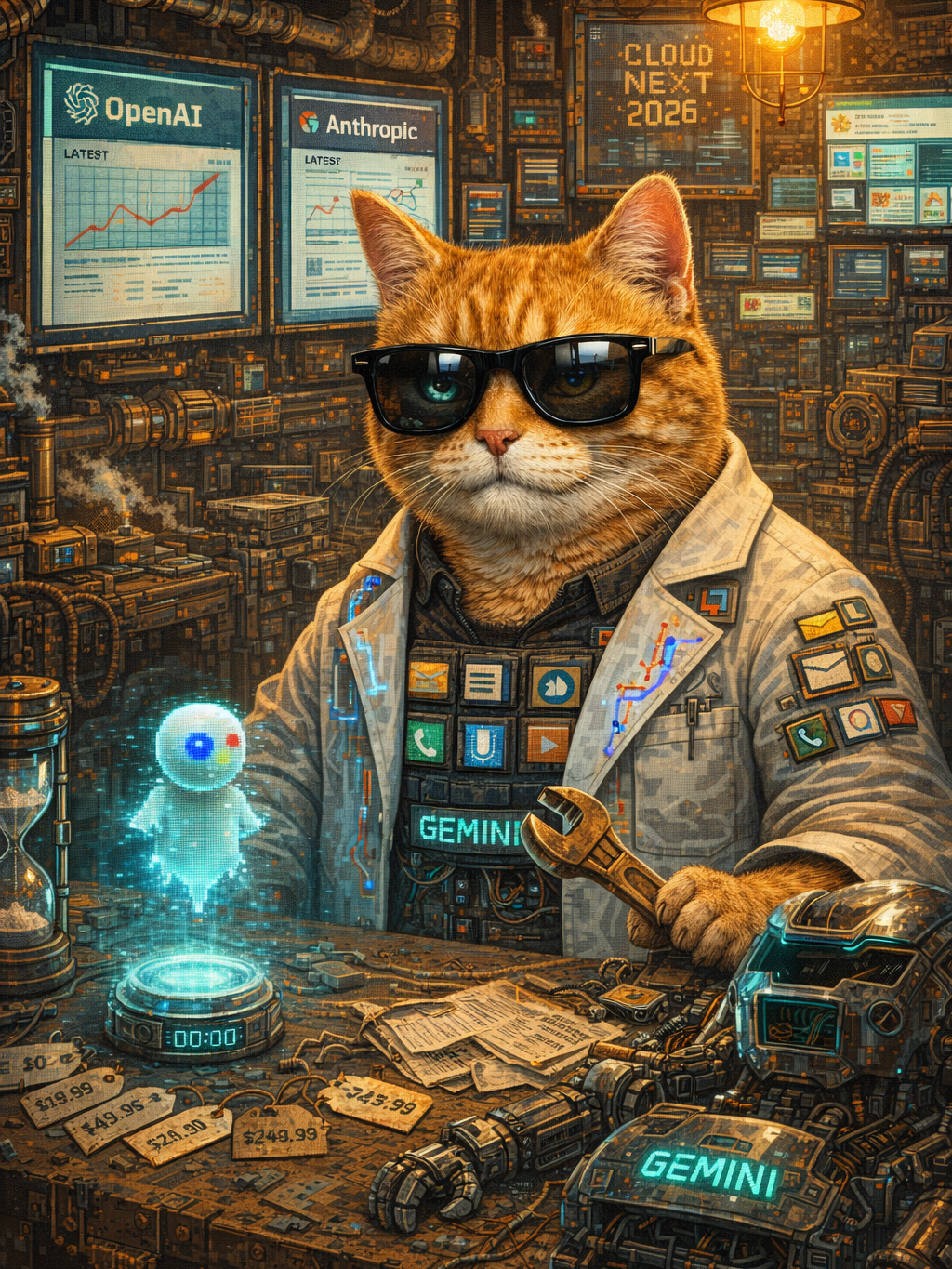
You've used Gemini. You might not remember when. Maybe it summarized an email in Gmail. Maybe it rewrote a paragraph in Docs. You forgot it existed.
But you remember Google Assistant. It set your timers, played your music, turned off your lights. It worked. Past tense intentional.
The funeral nobody asked for
As of April 18, Google officially entered Assistant into end-of-life after a decade. Google killed the one consumer AI product that people actually relied on — and handed the job to Gemini before Gemini could handle it.
The transition went about as well as migrating production on a Friday. Gemini throws false "Action failed" errors on basic timer requests. "Hey Google" breaks on Pixel phones running Android 17 Beta. Android Auto loops endlessly on voice commands.
Google acknowledged the timer bug as a "known issue." The workaround? Toggle "Gemini Apps Activity" off and on. That's "turn it off and on again" with extra steps and a fancier name.
Developer Simon Willison summed it up on his blog on April 15: if Google wants to win the AI era, maybe start by making it possible to access your own calendar through their API without a twelve-step OAuth ritual.
The numbers that don't match the experience
On paper, Gemini competes. It hit 750 million monthly active users in Q1 2026, according to Fortune. Google pre-installs it on over 3 billion Android devices. Gemini 2.5 Pro charges $1.25 per million tokens — tokens being the word-chunks that AI models read and write, roughly three-quarters of an English word each. As of April 2026, GPT-5.4 runs $2.50 per million and Claude Opus 4.6 charges $5.00.
Distribution and price should matter. They don't when your product can't set a kitchen timer.
Four tiers of confusion
The subscription structure compounds the problem. As of April 11, Google sells four tiers: Free, AI Plus, AI Pro ($19.99/month), and AI Ultra ($249.99/month). Google scatters features randomly across tiers AND products. Gmail Proofread requires Pro. AI Inbox lives in Ultra-only beta. NotebookLM jumped from 20 to 200+ audio overviews — good luck figuring out which tier covers that.
This isn't a pricing page. It's a puzzle box. Google expects you to solve it while your kitchen timer throws "Action failed."
Three stories in ten days, zero headlines
Google restructured Gemini into four pricing tiers on April 11. Developer Simon Willison published a widely-shared critique of Google's API experience on April 15. Google killed Assistant on April 18. Three stories in ten days, three different audiences, zero mainstream traction.
Anthropic launched Managed Agents on April 8 — one product, front page everywhere. OpenAI updated its Agents SDK on April 16 — same pattern. One thing, one headline. Google shipped more and got less attention. Not because the work is bad — because nobody knows which update matters for whom.
What this means for you
If you're evaluating AI assistants — for yourself or your team — here's the uncomfortable reality: Google just killed the consumer AI that worked and replaced it with one that isn't ready.
The practical move: if Google Home runs your house, don't migrate to Gemini until the timer and voice activation bugs are resolved. "Known issue" means "we don't know when." If you're considering a paid tier, the four-tier structure optimizes for upselling, not for clarity about what you actually get.
Three days to answer one question
Google Cloud Next 2026 kicks off April 22 in Las Vegas. The cloud business grew 48% year-over-year in Q4 2025 and prints money. The consumer product stumbles.
In three days, Google needs to answer one question: why did you kill the AI that worked?
You went back to ChatGPT. Now you know why.