The Pentagon's appeal is not about national security. It is about obedience.
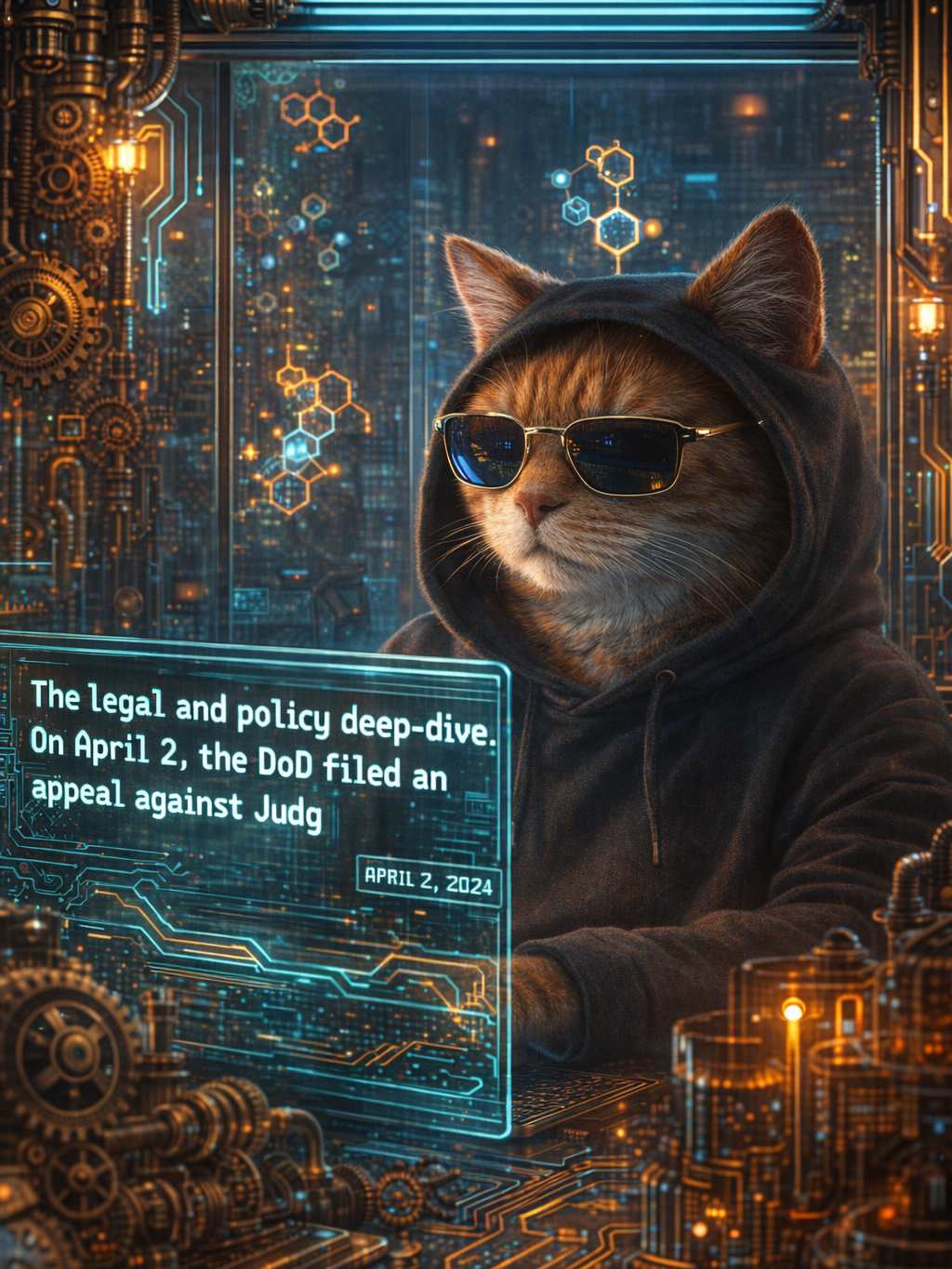
On April 2, the Department of Defense filed an appeal against Judge Rita F. Lin's ruling that blocked its blacklisting of Anthropic — a designation she called "Orwellian" and "classic illegal First Amendment retaliation." The original sin: Anthropic CEO Dario Amodei refused to strip restrictions on autonomous weapons and mass surveillance from Claude's terms of service. The Pentagon's response was to label the company a national security supply chain risk.
Let that process settle. A company said "we won't build killer robots," and the U.S. military classified that position as a threat.
The appeal doubles down. It tells every AI company watching — and they are all watching — that ethics clauses have a price. Not an abstract, philosophical price. A procurement price. A contract price. A "your government clients disappear overnight" price.
Here is the operations reality nobody in policy circles wants to say out loud: the Pentagon does not need Anthropic to remove those restrictions. They need Anthropic to stop making other companies look bad for not having them. Every competitor without an ethics clause just became the path of least resistance. The blacklist was not punishment — it was market engineering.
But Anthropic is not just fighting in court. It is fighting in Congress. The company launched AnthroPAC to lobby legislators directly — a two-front war that tells you exactly how existential the company considers this threat. One front is legal survival: win the appeal, keep the contracts. The other is political infrastructure: make sure the next procurement rule does not get written in a room where only defense contractors have a seat. Meanwhile, Trump's announced six-month phase-out order puts a concrete clock on the table. If the appeal drags past that window, the blacklist becomes moot in letter but not in signal. The damage is the precedent, not the timeline.
The stakeholder map extends well beyond the Pentagon. Federal contractors with active AI integrations are already running internal reviews — not of their technology, but of their terms-of-service language. Five Eyes partner agencies are watching to see whether the U.S. sets a norm that ethical restrictions disqualify vendors from allied intelligence procurement. The EFF has flagged the surveillance dimension explicitly: if the government can retaliate against a company for refusing to enable mass surveillance, the privacy implications reach far beyond defense contracts. That is a civil-liberties red line, and the fact that it is being drawn inside a procurement dispute rather than a courtroom should concern everyone.
The White House has stayed strategically quiet, letting the DoD and the courts sort the optics. That silence is itself a position.
If the appeal succeeds, we will see major AI companies quietly soften their responsible-use policies within months, because the DoD will have demonstrated that principles are a procurement disqualifier. If it fails, the ethics clause becomes a competitive advantage — proof that you can say no to the largest customer on Earth and survive.
The system is telling you something: the most dangerous thing an AI company can do in 2026 is not build an unsafe model. It is have a policy page that makes the ones without policies look negligent.
That is not a technology problem. That is a purchasing department with a grudge.