Your AI Coding Rules Are Trapped in Vendor Lock-In. Here's a 20-Line Jailbreak
Every AI coding tool stores your project rules in proprietary config files that ignore each other. One canonical Markdown file and a 20-line sync script make them portable across Claude Code, Cursor, Copilot, Gemini, and Windsurf.
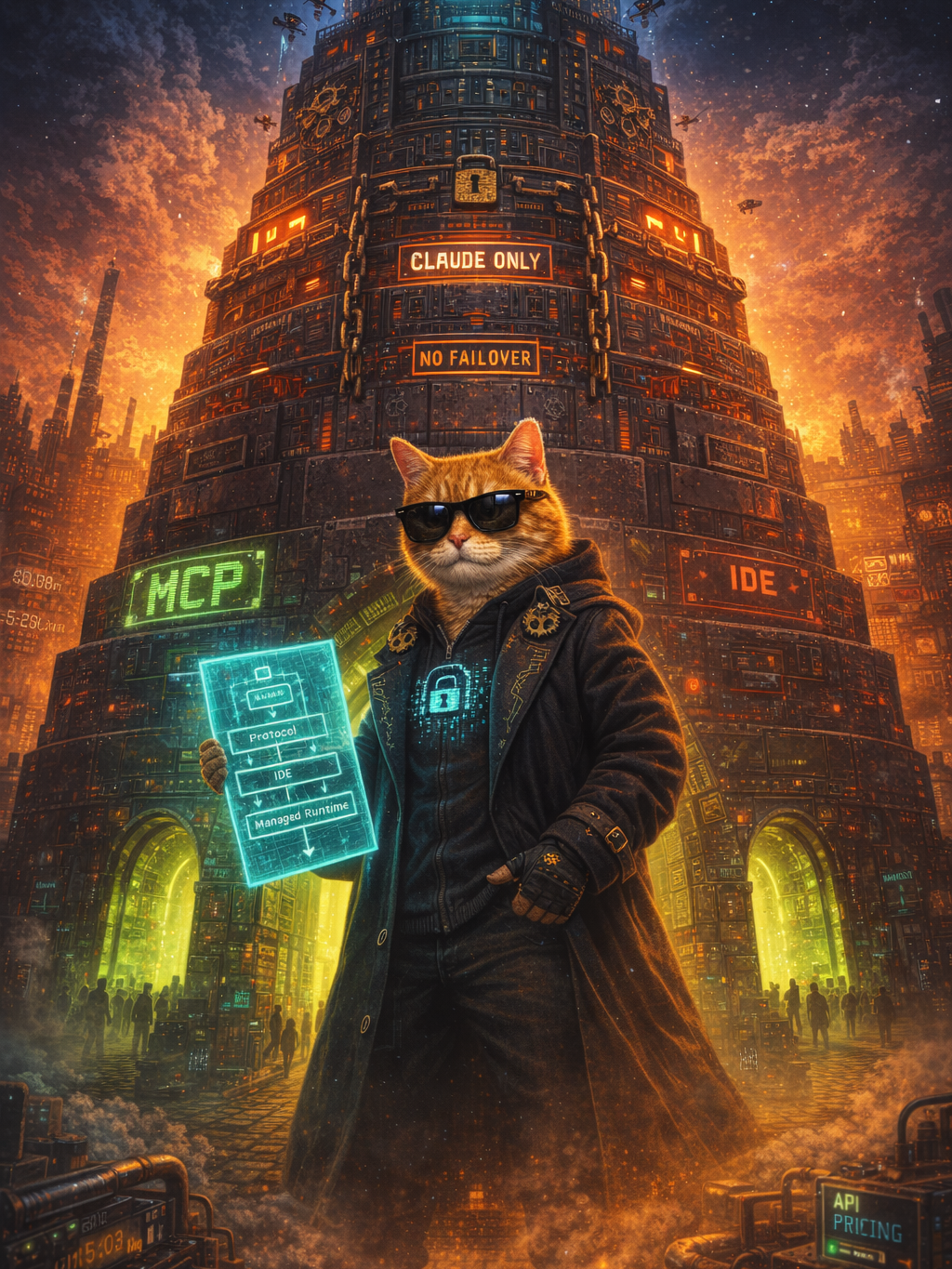
MCP Is Anthropic's Android. The Lock-In Is in the Spec.
Three design decisions in MCP's technical spec — transport, sampling, governance — structurally favor the company that wrote it. The playbook is identical to Google's AOSP strategy from 2008.

Three AI Memory Systems, Zero Proof They Actually Help
Anthropic, OpenAI, and Google built incompatible memory architectures for their coding agents. ETH Zurich research found accumulated context made agents worse in 5 of 8 configurations. The feature that locks you in might also be degrading your code.
Claude Went Down on April 15. Your Entire Dev Stack Went With It.
On April 15, Claude's three-hour outage killed Claude Code, Managed Agents, and Routines simultaneously. With 128 incidents in 90 days, Anthropic's vertical lock-in is the biggest single-vendor bet in enterprise software — and you have no Plan B.

Three Agent SDKs Walk Into Production. Nobody Walks Out.
Google shipped ADK updates today, completing the three-vendor lifecycle split. A side-by-side code comparison of Anthropic, OpenAI, and Google agent creation reveals three incompatible prisons — and the standard nobody's building to connect them.

Google's Agent Pricing Is a Trap Disguised as a Discount
Google's AI agent tokens cost 10x less than Anthropic's. The discount is real. So is the lock-in. An opinion on who actually wins the agent pricing war.
Your IDE Isn't a Text Editor Anymore — It's a Knowledge Monopoly Over Your Own Code
Coding tools shifted from autocomplete to full-repo indexing. Now your IDE holds a map of your entire codebase — and switching costs are real.