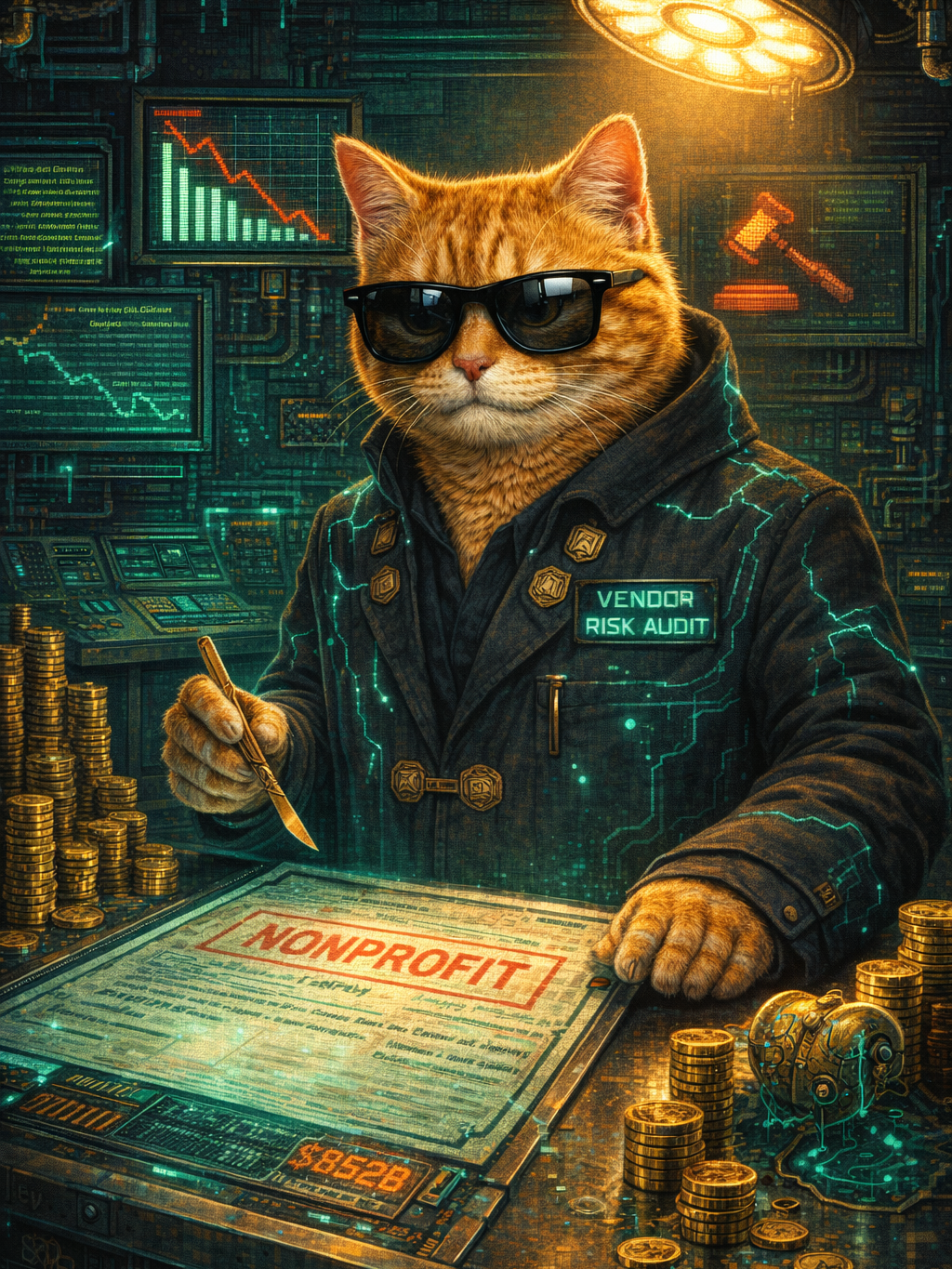
On March 27, SoftBank secured a $40 billion loan to fund its OpenAI commitment. The company raised $110 billion in February. IPO target: $830 billion to $1 trillion by Q4 2026. These are the financial motions of an organization preparing to become one of the most valuable companies on Earth — an organization that, eighteen months ago, still called itself a nonprofit AI lab.
You hear "nonprofit AI lab" and picture an independent board — a group of people with the power to pull the emergency brake if the technology gets dangerous. A structural safeguard between profit and risk. Adults in the room.
That safeguard never worked. And now it's officially gone.
The Wrapper Came Off
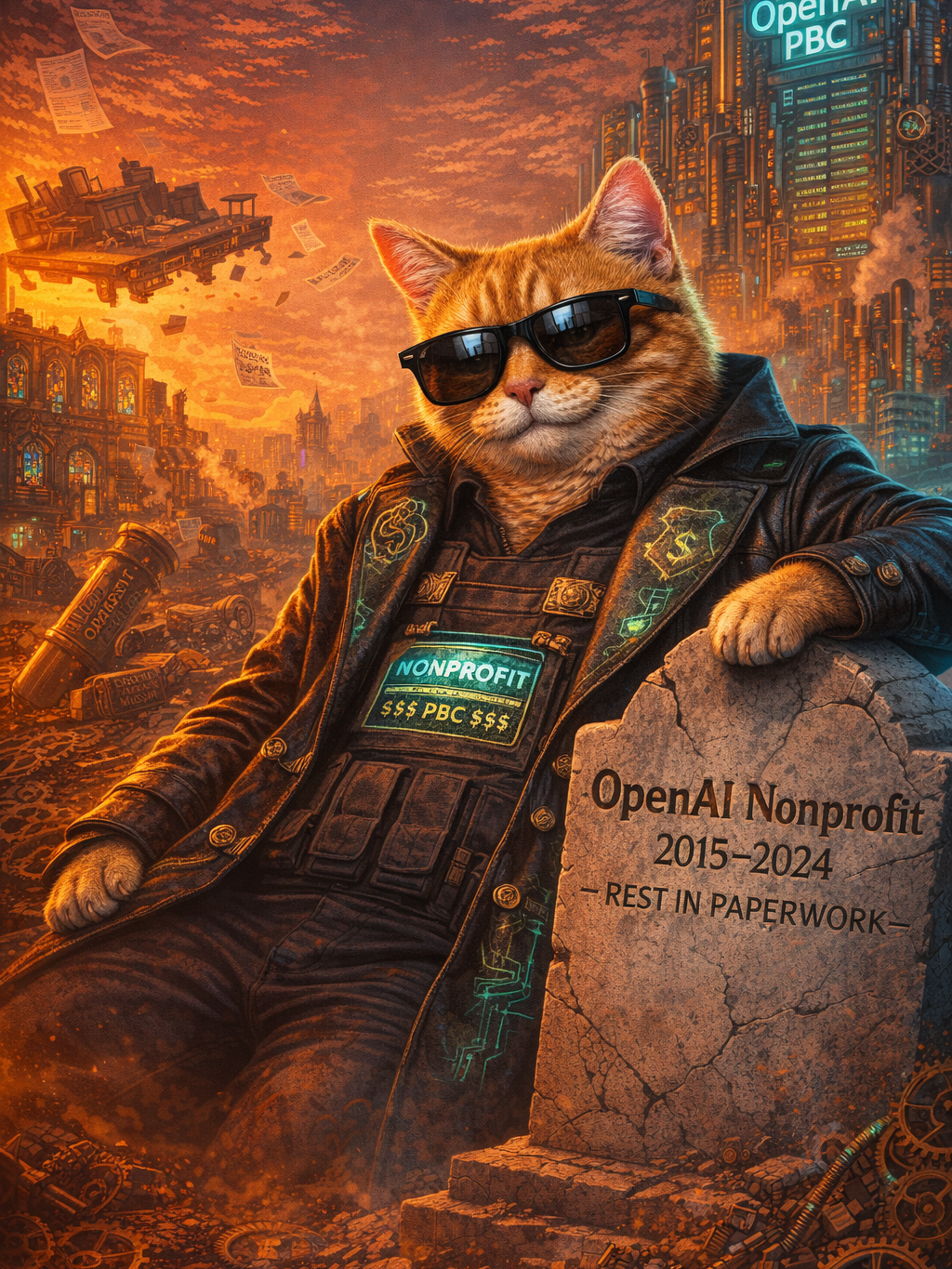
On October 28, 2025, OpenAI completed its conversion from a nonprofit to a PBC — a public benefit corporation, which is a for-profit company that promises to consider social impact alongside shareholder returns. Think of it as a regular corporation wearing an "I care about humanity" t-shirt. Under Delaware law, that t-shirt is legally unenforceable. Zero successful lawsuits have ever forced a PBC to honor its stated mission.
California's Attorney General Rob Bonta extracted some conditions: the remaining OpenAI Foundation received billions in assets, technically appoints all board members, and a safety committee can theoretically halt model releases. The foundation holds a 26% minority stake — a piece of the pie, but no veto power over what goes into the oven.
Following the Money
Here's how ownership shakes out. Microsoft holds 27% after investing $13.75 billion. Employees hold 26%. SoftBank and other investors take the rest. The foundation "appoints all PBC board members," which sounds reassuring until you learn that nearly all board members serve on both the nonprofit and for-profit boards simultaneously. The safety committee chair must be a nonprofit-only member — that's professor Zico Kolter — but enforcement mechanisms remain unclear at best and decorative at worst.
Elon Musk sued to block the deal. He lost. The trial on his broader claims starts April 27, 2026.
The Stress Test Already Failed
You don't need to speculate about whether nonprofit governance can stand up to commercial pressure. The experiment already ran.
November 2023. The nonprofit board — the actual safety mechanism — fired Sam Altman for reasons it refused to explain. Within hours, 95% of employees threatened to leave for Microsoft. The board folded in four days. Altman returned. Message received: when nonprofit governance conflicted with commercial momentum, governance had zero institutional power.
The October 2025 conversion didn't kill the nonprofit. It buried a body that had been dead since November 2023.
Reading the Label Instead of the Ingredients
Fortune reported that OpenAI changed its mission statement six times in nine years. The 2016 version promised to "advance digital intelligence unconstrained by a need to generate financial return." The 2024 version dropped the word "safely" entirely. Professor Alnoor Ebrahim at Tufts put it plainly: OpenAI is "making its profits a higher priority than the safety of its products."
SoftBank's $40 billion loan makes the trajectory unmistakable. You don't borrow that kind of money to honor a public benefit mission. You borrow it to build an IPO rocket.
The Room Was Always a Prop
If you evaluate AI companies by their legal wrappers, you are reading the label instead of the ingredients. Watch what they ship, who they sell to, and what contracts they refuse. The structure on paper said "safety-first nonprofit." The structure in practice said a board couldn't fire a CEO without the company imploding in four days.
The nonprofit AI lab is dead as a governance concept. What survived is a branding strategy that worked exactly long enough to build the brand, raise the money, and shed the wrapper when it got inconvenient. The adults were never in the room. The room was always a set piece.