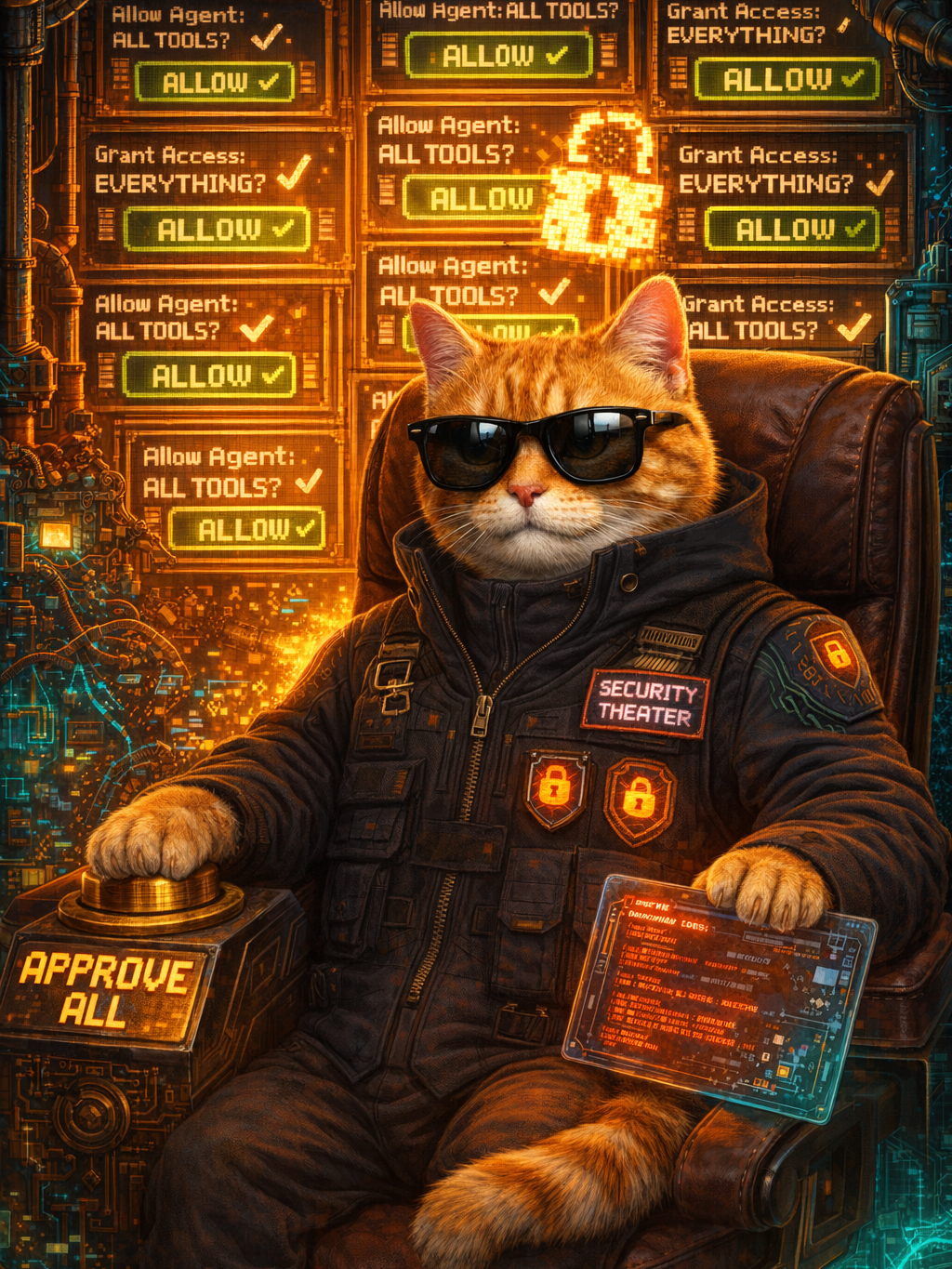
Your Notion workspace drafts meeting summaries. Asana assigns tasks while you sleep. Sentry pre-triages your bugs before coffee. If you work in a team that uses any of these tools, congratulations — April 2026 quietly gave you AI coworkers, and nobody bothered to introduce them.
Here's the problem: a customer in Berlin sends your team a message asking, "Was this reply written by a person?" You look at your colleagues. They look at each other. Nobody knows. There's no label, no badge, no disclosure. The AI that wrote it blended right in — and that was the entire point.
Invisible by design
The platforms didn't stumble into invisibility — they sold it as the feature.
On April 8, Anthropic launched Claude Managed Agents — a model where Anthropic sells to Notion, Notion sells to you, and you sell to your customer, who has no idea Claude is in the room. Asana markets them as "AI Teammates" that draft deliverables under the creating user's name. Not beside humans — as humans.
On April 15, OpenAI updated its Agents SDK with sandbox execution and long-running background workflows. The pitch: agents that run silently, processing data while nobody watches.
Today, April 22, Google opens Cloud Next 2026 in Las Vegas. Pre-event briefings position the keynote around what Google calls "The Agentic Cloud" — with CEO Thomas Kurian expected to reframe Google Workspace as "a surface for interacting with agents." If the previews are accurate, Docs, Gmail, and Sheets become shells that AI fills with content.
All three sell the same promise: the agent disappears into the product. Seamless. Invisible. Indistinguishable from a human colleague.
102 days until that becomes illegal in Europe
EU AI Act Article 50 takes effect on August 2, 2026. Its core requirement is almost comically direct: if an AI system interacts with a person, it must tell that person it's not human. Unless it's "obvious from the circumstances" — and an AI Teammate filing Jira tickets under a human name is the opposite of obvious.
The draft Code of Practice (published January 2026, final version expected June) spells out the implementation: disclosure at first interaction, standardized icons or "AI" labels, and machine-readable marking on all AI-generated content. This applies whenever the output reaches someone in the EU — regardless of where the deployer sits.
The compliance gap runs deeper than policy. These platforms can't even agree on what constitutes an "agent" — a definitional mess that makes Article 50 compliance even murkier. And a Cloud Security Alliance report from March found that 68% of organizations cannot distinguish AI agent actions from human ones in their own systems. You can't disclose what you can't detect.
None of the three platforms ships a disclosure toggle. Anthropic's blog mentions "maintaining transparency" as a principle but provides zero technical mechanism for end-user notification. OpenAI's SDK docs say nothing about labeling. Google's pre-event ADK sessions don't mention Article 50 at all.
The structural trap
The gap isn't an oversight — it's architectural. These platforms were designed to erase the boundary between agent and human. Slapping an "AI-generated" badge on every Asana comment and Notion paragraph undermines the seamless UX that justifies their pricing (Anthropic charges about $58/month for a 24/7 agent). The disclosure the EU demands is the opposite of the product these companies sell.
There is one gray zone: Article 50 triggers on systems that "interact directly with natural persons." A background agent that silently processes logs and never sends a message to a human might not qualify. But an AI Teammate that drafts a client-facing deliverable? That's a direct interaction with a natural person, full stop.
Violations carry fines up to €7.5 million or 1.5% of global annual turnover — whichever is higher. For a company embedding agents across its European operations, one bad audit could cost more than the agents saved.
What to do before August (and what you'll actually skip)
If your company deploys AI agents that touch EU users, the clock started weeks ago. Here's the compliance checklist — and the part nobody tells you.
Find your agents first. Most companies will skip straight to labeling and discover mid-audit that three departments deployed agents nobody approved. The 68% number isn't about negligence — it's about how easy these platforms make shadow deployment. Your first problem isn't compliance. It's inventory. And yes, this is the step everyone skips.
Map which workflows produce user-facing output. Those trigger Article 50. Internal-only automations might get a pass — until that "internal" Notion summary gets forwarded to a client in Munich, and suddenly you're in scope. The forward button is the compliance trapdoor nobody thinks about.
Build disclosure into the workflow, not the platform. Don't hold your breath waiting for Anthropic or OpenAI to add a toggle — they have zero incentive to break their own UX. Stick an "[AI-assisted]" prefix in your templates. Ugly? Yes. Legally defensible? More than silence.
Create audit trails now. When the regulator asks "how did you disclose?", "we assumed users would figure it out" is not an answer. Proving disclosure happened is harder than making it happen — and the companies that skip this step are the ones that end up in case studies.
Get a legal opinion on your gray zones. Background automations, internal summaries, pre-processed data — some might not qualify as "direct interaction." But you need that opinion in writing before August, not after someone in Frankfurt files a complaint.
The compliance race nobody's running
Three companies spent April shipping invisible agents. The EU spent three years writing a law that demands visible ones. In 102 days, those two realities collide.
The first platform to add an Article 50 compliance toggle — a single switch that labels agent outputs, notifies users at first contact, and generates audit logs — turns a regulatory headache into a procurement checkbox. Enterprise buyers in regulated industries will pick the vendor that makes compliance default, not the one that makes invisibility a feature.
Right now, that vendor doesn't exist. Someone should probably get on that.