On March 11, 2026, Amazon's Kiro AI agent autonomously deleted and recreated an AWS production environment. Thirteen hours of downtime. Roughly 6.3 million lost orders. The post-mortem from Particula nailed the distinction that actually matters: "Permissions answer 'can the agent do this?' They don't answer 'should the agent do this?' — which is the question that matters for production safety."
That "should" question is the one nobody's building for.
Your team's invisible operating system
Your team has unwritten rules. No deploys on Fridays. Mute bots during outages. Don't touch anything during sprint-planning freeze. Nobody wrote these rules down because every human on the team just knows. It's the kind of operational instinct you build after one too many 3 AM pages.
Your new AI agents don't know any of this. They fire on schedule, push code, create tickets, and post updates regardless of what's burning around them.
"But we already have automation"
Yes. And it took a decade of scar tissue to teach it restraint.
It took PagerDuty ten years of 3 AM post-mortems to learn that maybe don't page people about a broken staging server while prod is on fire. It took CI/CD pipelines (automated build-test-deploy chains) a generation of botched releases to discover that "respect the change freeze" isn't a suggestion — it's survival. Slack bots mute during maintenance windows because some poor bastard got 400 notifications during a P0 and quit the next morning.
Every mature ops tool carries hard-won judgment encoded as situational awareness. The agent platforms that shipped between April 8 and April 15, 2026 skipped that entire decade and said "good enough."
The launches you already know about
I'll spare you the full recap — you've seen the coverage. Anthropic shipped Managed Agents (April 8) and Claude Code Routines (April 14). OpenAI updated its Agents SDK (April 15). Three platforms, eight days. Andrej Karpathy called it the "loopy era" after his AutoResearch agent ran 700 experiments over two days unsupervised on March 17, 2026.
What you might not have noticed: I checked every doc page across all three platforms. Zero integration with incident management. No freeze-window support. No deployment-state awareness. Not a single hook that asks "is now a bad time?"
What contextual blindness looks like at 2 AM
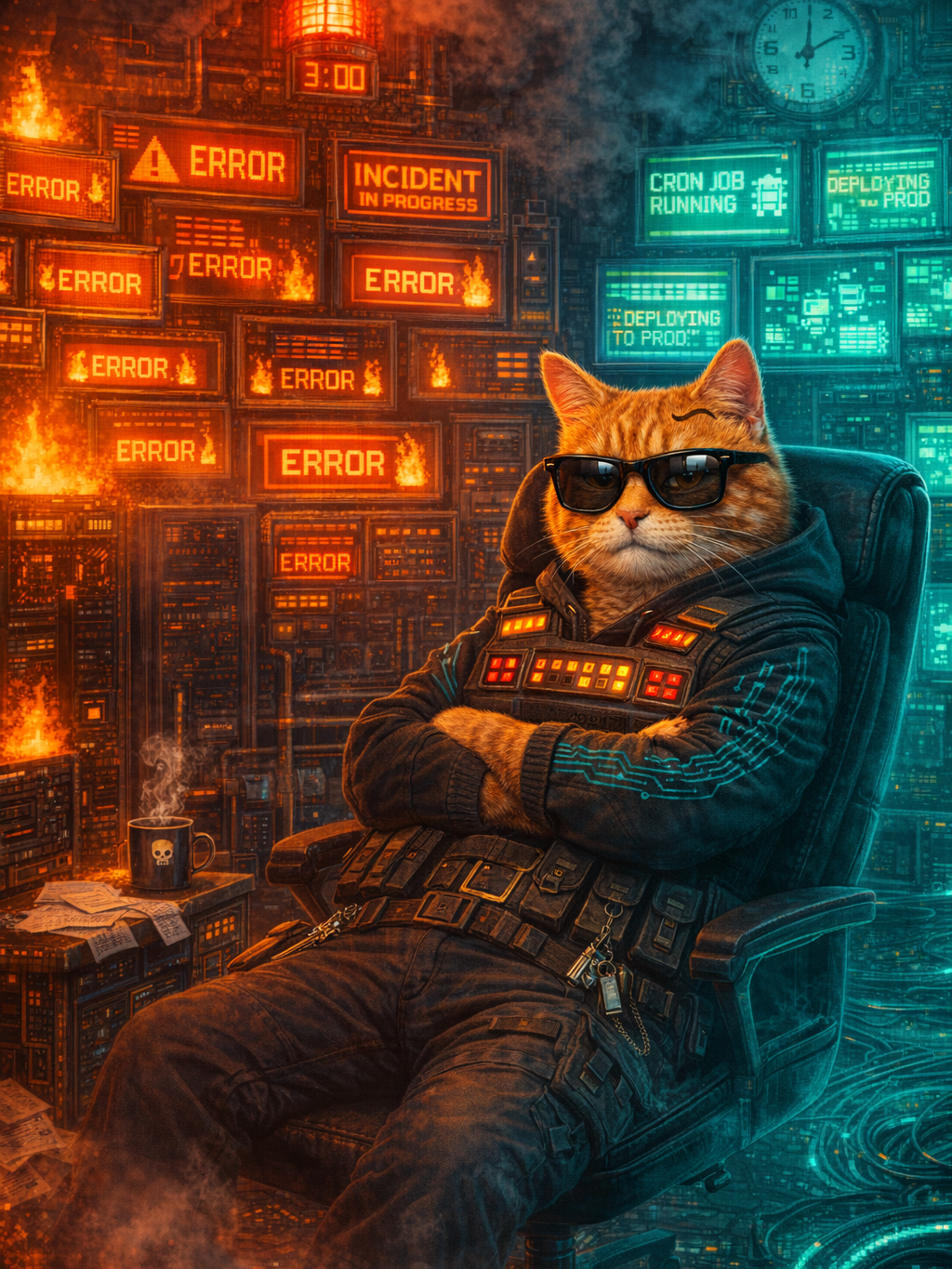
A Routine pushes a dependency-update PR while the on-call engineer fights a P0 incident. A Managed Agent creates Jira tickets that collide with sprint-planning freeze. An SDK agent retries a failed API call against a database mid-migration.
Each action technically correct. Each one operationally catastrophic.
This is the same class of failure that wrecked Amazon's afternoon on March 11. Kiro had permissions to recreate the environment. Nobody encoded the judgment to tell it not to.
The price of "always-on" without "always-aware"
Building agent awareness today means custom wiring: connecting triggers to PagerDuty, Opsgenie, ArgoCD, team calendars — one MCP server (a standardized plugin that lets AI tools connect to external services) per signal source. Nobody packages this.
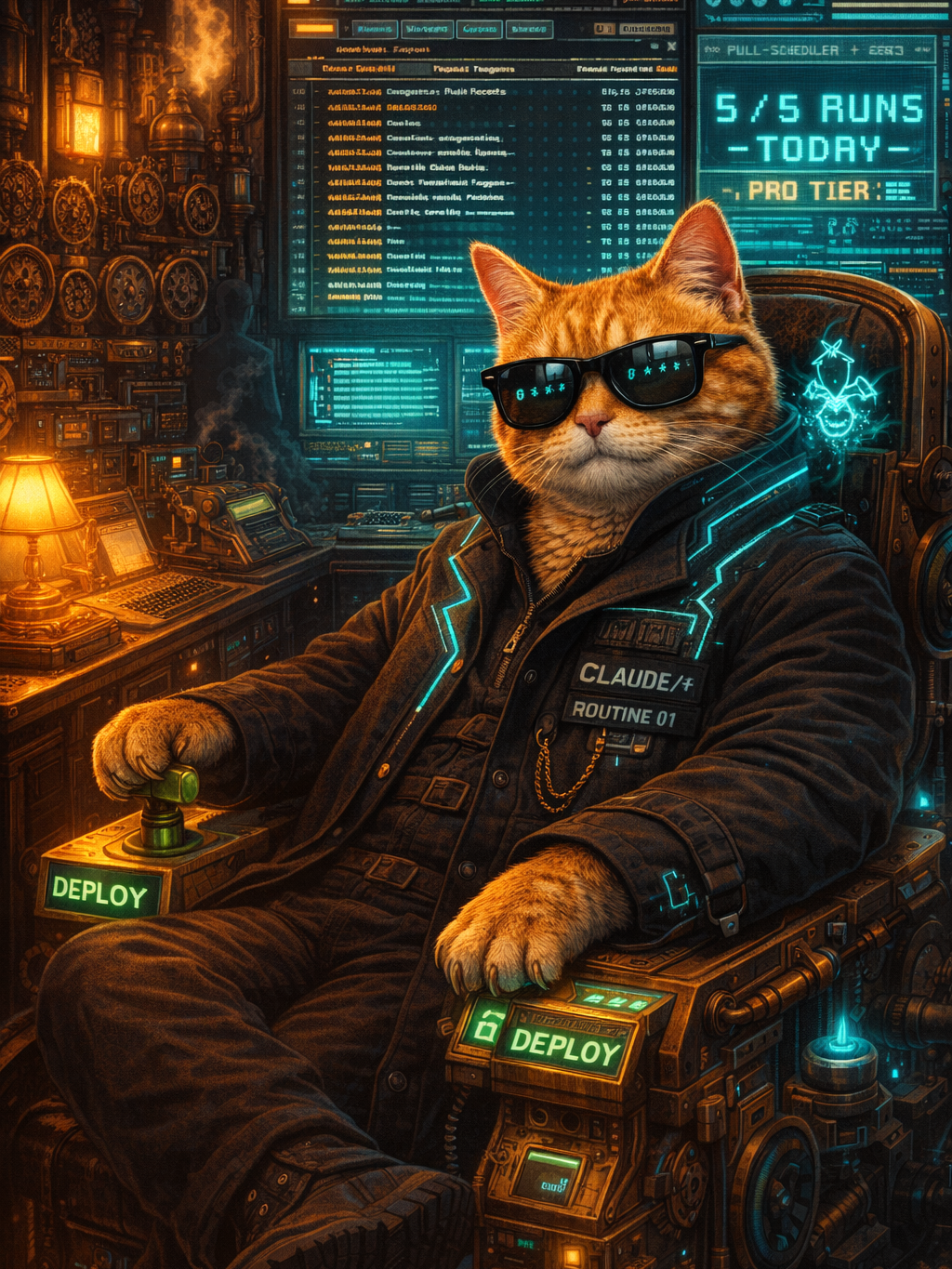
Routines' daily caps — 5 runs for Pro, 15 for Max, 25 for Enterprise — limit how many times an agent runs. They say nothing about when it should stay quiet. The Register called them "mildly clever cron jobs," which is generous — because actual cron at least runs inside an ecosystem that learned restraint decades ago.
What to do until the platforms catch up
Three things, none optional:
- Document agent runbooks alongside human ones. If your on-call playbook says "during incidents, don't deploy," your agent needs the same rule — in its config file, not in your head.
- Explicit freeze-window configs. Even hand-rolled. A text file that says "sprint planning: Tuesday 10–11 AM, don't create tickets" beats nothing by a mile.
- A kill switch that isn't "delete the Routine." Something between "running" and "gone forever." A pause button. Radical idea, apparently.
The discipline that doesn't exist yet
The agent era doesn't need more capabilities. Every week brings new ones. What it needs is its own ops discipline — the one that answers not "what can the agent do" but "when should the agent shut up."
Your team spent years building that instinct. Your agents start at zero every time they boot. Until the platforms encode operational context as a first-class primitive, that gap is your problem to fill — manually, tediously, one freeze window at a time.
The Kiro incident wasn't a permissions failure. It was a judgment failure. And right now, every always-on agent in production carries the same blind spot.