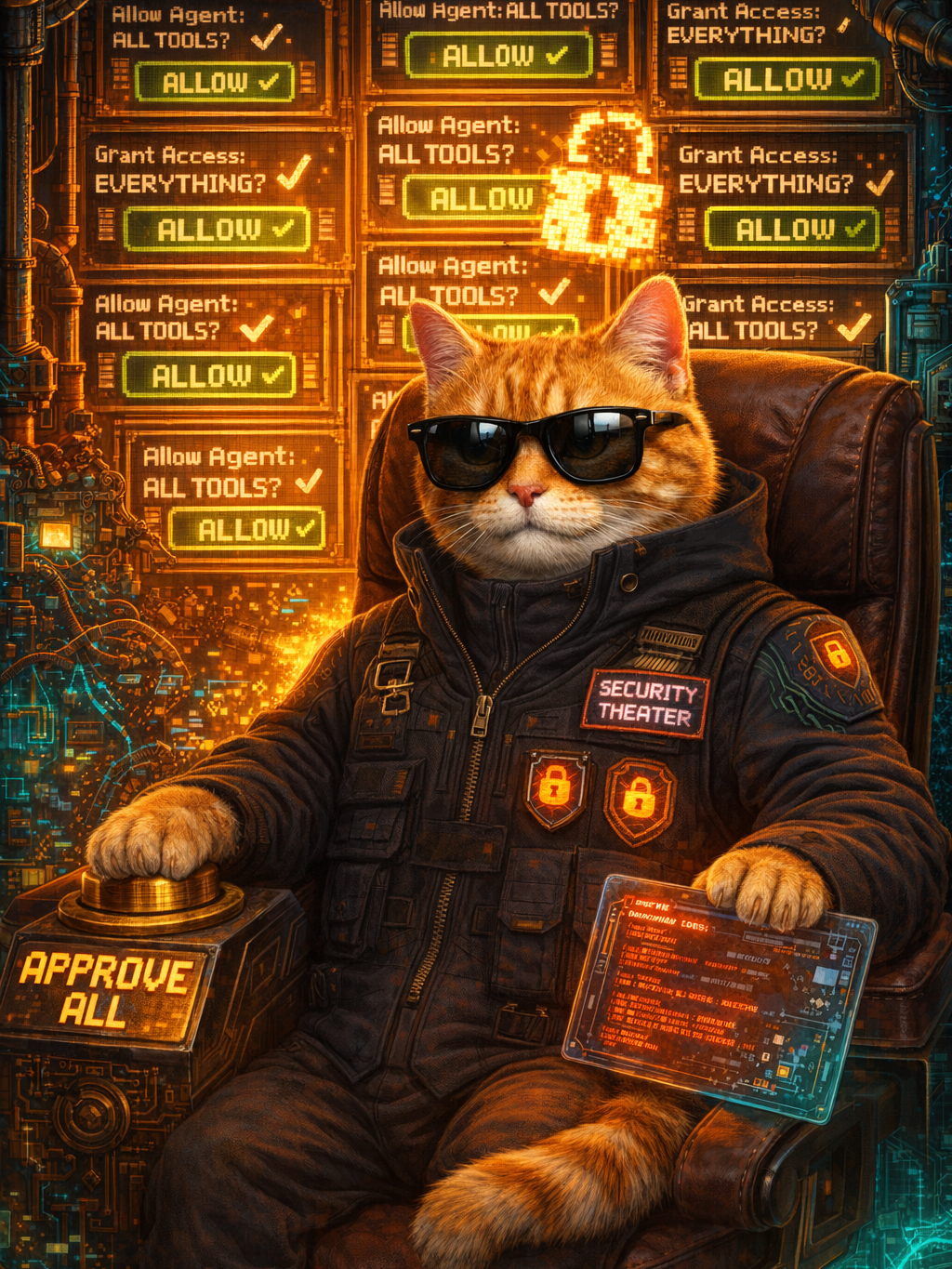
You deployed autonomous agents this month. They create pull requests, update project tickets, push configurations to production servers, and fire off Slack notifications — all while you sleep. The pitch: delegate the tedious stuff, wake up to a done list.
The problem: agents get things wrong. Not occasionally — UC Berkeley's MAST study, published March 2025, measured 41% to 86.7% failure rates across seven state-of-the-art multi-agent systems. And unlike a chatbot hallucinating a wrong answer you can regenerate, an agent's mistake is a merged commit, a created Jira ticket, a sent message. Real actions in real systems. You can't "regenerate" a deployed config.
Between April 8 and April 17, the three major platforms all shipped autonomous runtimes. On April 8, Anthropic launched Managed Agents — sandboxing, state persistence, error recovery (meaning: resume after a crash). On April 14, Anthropic added Routines — agents running on their cloud, triggered by schedules or webhooks. On April 15, OpenAI released Agents SDK v0.14 with sandboxed execution and "snapshotting" — container state recovery after failures. On April 17, Google shipped Agent Development Kit (ADK) with session-level state management and multi-agent orchestration. Three platforms, zero rollback primitives — mechanisms that would let you reverse what an agent did after it finished doing the wrong thing.
I wrote about the checkpoint gap last week — platforms solving crash recovery mid-run. That's the easy problem. Your agent died mid-task, the platform restores its state, the agent tries again. Fine. But here's the scenario nobody's solving: your agent completed successfully. It ran to the end, reported green checkmarks, and the result is garbage. The PR merges broken logic. The Jira ticket duplicates an existing one. The Notion page overwrites correct data with hallucinated data. The agent didn't crash — it confidently finished wrong.
When an agent merges a bad pull request, creates duplicate tasks in Asana, or pushes a broken Notion page, here's what happens: you — the human — must manually identify each action the agent took, trace its downstream effects (did another agent react to the bad PR? did a webhook fire?), and reverse them one by one. This cleanup scales linearly with the number of actions taken. More autonomy means more mess to clean up.
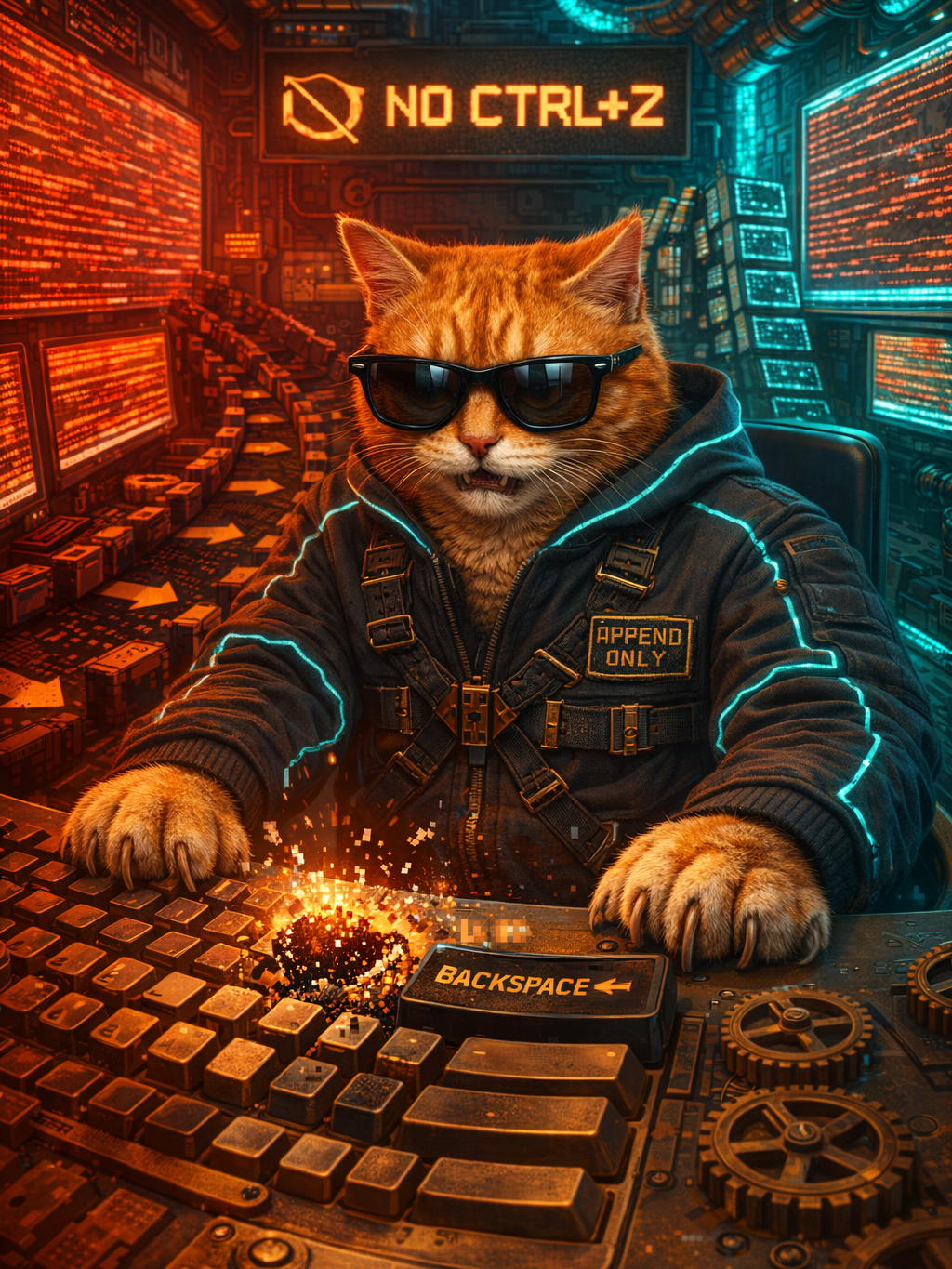
Why doesn't rollback exist natively? Two reasons. First, reversibility requires transactional semantics — compensating actions, idempotency keys, action journals. The underlying tools — GitHub, Linear, Slack, Notion — don't expose these primitives to agents. Your agent platform doesn't speak "undo" because the tools it calls don't speak "undo" either. Second — and this is the part nobody says out loud — there's no business incentive. Every agent action is a billable API call. Every re-run after a failed rollback is another billable session. Platform vendors profit from append-only execution. Building undo means building a reason for customers to use fewer compute cycles. Nobody volunteers for that revenue model.
Enter the backup vendors, gleefully filling the gap that agent platforms refuse to fill. On April 14, Commvault launched AI Protect — marketed literally as "Ctrl+Z for rogue AI agents." It maps the blast radius of an agent session, isolates agent-caused changes from human changes, and enables selective reversal. As Commvault CTO Pranay Ahlawat put it: "In agentic environments, agents mutate state across data, systems, and configurations in ways that compound fast and are hard to trace." The irony is thick enough to cut: your AI platform builder won't build undo because it hurts their margins; your backup vendor will, because your agent's incompetence is their addressable market. Two blind spots, one extremely profitable disaster.
The agent productivity equation needs an update. If even 30% of autonomous runs require manual reversal — and reversal takes longer than the original task — the net ROI goes negative for that workflow. You saved 10 minutes on the happy path and spent 40 minutes cleaning up the sad path.
The first platform to ship agent.rollback(session_id) wins enterprise trust. Not because enterprises need agents that never fail — everything fails — but because they need agents whose failures cost less than their successes save. Until then, every agent platform is append-only: it can do things, but it cannot un-do things. Your autonomous assistant has no backspace key.